

 Facebook
 X
X
 Pinterest
 Copy Link
A contingent offer on a home sale is often the bridge between the home you own and the home you hope to buy next. For many Northern Kentucky families, selling first is not simply a preference. The proceeds from that sale may provide the down payment, reduce the new mortgage payment, or make the next move financially comfortable. The challenge is that a seller considering your offer also has to weigh the uncertainty of your current home selling on time.
That does not mean a home-sale contingency is a bad idea. It means the offer needs to be structured thoughtfully, supported by realistic numbers, and communicated clearly. The right approach can protect your finances while still giving you a credible chance at the home you want.

What a Contingent Offer on Home Sale Means
A contingent offer is an offer to purchase a home that depends on a specific condition being met. With a home-sale contingency, the buyer must sell their current property before they are required to move forward with the purchase.
The contingency usually identifies the address of the buyer’s current home and sets a deadline for it to go under contract, close, or both. If the stated condition is not met by the deadline, the buyer may be able to cancel the purchase agreement and receive their earnest money back, depending on the language of the contract.
There are two common situations. In one, the buyer’s home is already under contract but has not yet closed. In the other, the buyer has not listed their home yet, or it is listed without a buyer. Sellers generally see these situations very differently.
A buyer whose home is already under contract has cleared an important hurdle, even though that sale may still include inspections, appraisal, financing, or other contingencies. A buyer who needs to list and sell their home from scratch presents more unknowns. The price, condition, marketing plan, and buyer demand for that home all affect whether the new purchase can happen.
Why Buyers Use a Home-Sale Contingency
The main benefit is financial protection. Selling your current home first helps you avoid owning two homes at once or taking on a larger payment than you intended. It can also prevent a rushed sale at a lower price just to meet the deadline for a new purchase.
For move-up buyers, this can be especially practical. A growing family may need more bedrooms, a better layout, or a different school district, but a large part of their available down payment may be tied up in their current property. Downsizers often face a similar decision: they may prefer not to use savings for a new home until they know the equity from their existing home.
A home-sale contingency also creates room for a more orderly move. Rather than moving into temporary housing, storing belongings, and moving again, a buyer may be able to coordinate both closings more closely. That convenience matters, but it should not be the only reason to use a contingency. The contract should reflect what you truly need to make a sound financial decision.
How Sellers View Contingent Offers
From a seller’s perspective, every offer is evaluated on both price and certainty. A strong price is attractive, but an offer tied to another sale introduces an additional link in the chain. If that sale falls through, the seller may lose valuable time and need to put their home back on the market.
This is why a seller may accept a lower offer from a buyer who is fully approved, has a substantial down payment, and does not need to sell another property. It is not necessarily a judgment about you or your home. It is a business decision shaped by the seller’s own timeline, finances, and confidence in competing offers.
Market conditions matter, too. In a slower market, sellers may be more open to a well-supported contingency because qualified buyers have more negotiating room. When desirable homes in Northern Kentucky receive multiple offers quickly, a seller may have less reason to accept added uncertainty. Even then, a contingent offer can succeed when it is clean, realistic, and backed by a marketable current home.
Make Your Offer More Competitive
A home-sale contingency should never be treated as a vague promise that your home will sell. Before writing an offer, understand what your current property is likely to sell for, how much you will net after mortgage payoff and closing costs, and what preparation may be needed before it goes on the market.
If possible, list your current home before making an offer on the next one. Better yet, have it under contract. This gives the seller more confidence and lets you make decisions based on a real sale price rather than an estimate. It also helps your lender provide a clearer picture of your purchasing power.
The offer terms can matter nearly as much as the contingency itself. A reasonable contingency deadline, strong pre-approval, appropriate earnest money, and flexibility around possession can all help. If your home is already under contract, providing relevant details about its status may reassure the seller, while still respecting privacy and contract obligations.
Pricing your current home correctly is one of the most important pieces. An overpriced listing can sit for weeks, placing the purchase at risk and making the contingency look less credible. A local pricing strategy should consider recent comparable sales, current competition, condition, location, and the pace of activity in your particular neighborhood. A home in Fort Thomas may attract buyers differently than one in Florence, Independence, Covington, or nearby Cincinnati communities.
Avoid trying to solve uncertainty by offering far more than a home’s value or waiving protections you genuinely need. Paying above market value, giving up inspection rights, or agreeing to an unrealistic deadline can create problems later. A competitive offer should be strong, not reckless.
Contract Clauses That Deserve Careful Attention
The exact language in a purchase agreement matters. A home-sale contingency can include deadlines for listing your property, accepting an offer, completing inspections, obtaining your buyer’s financing commitment, or closing. Each date should be achievable based on your property’s condition and local market activity.
Many contingent contracts also contain a kick-out clause, sometimes called a right-to-continue-marketing provision. This allows the seller to keep showing the home and accept another offer as a backup. If the seller receives a better or non-contingent offer, you may be given a limited period to remove your contingency or step aside.
That deadline can be stressful, but it serves a purpose. It gives the seller a path forward while giving you an opportunity to decide whether you can proceed without the sale of your current home. Before agreeing to this type of clause, talk with your lender about whether a bridge loan, home equity option, or other financing approach is truly available and affordable. Do not assume you can remove the contingency later without a clear plan.
Also pay attention to the difference between a contingency based on selling your home and one based on closing the sale. If your home goes under contract but the buyer later cannot obtain financing, your purchase could still be affected. The more details you understand upfront, the fewer surprises you are likely to face after inspections begin.
Alternatives When Timing Is Tight
Sometimes a traditional contingency is the best choice. Other times, a different plan may better fit your finances and the competition for the homes you are considering.
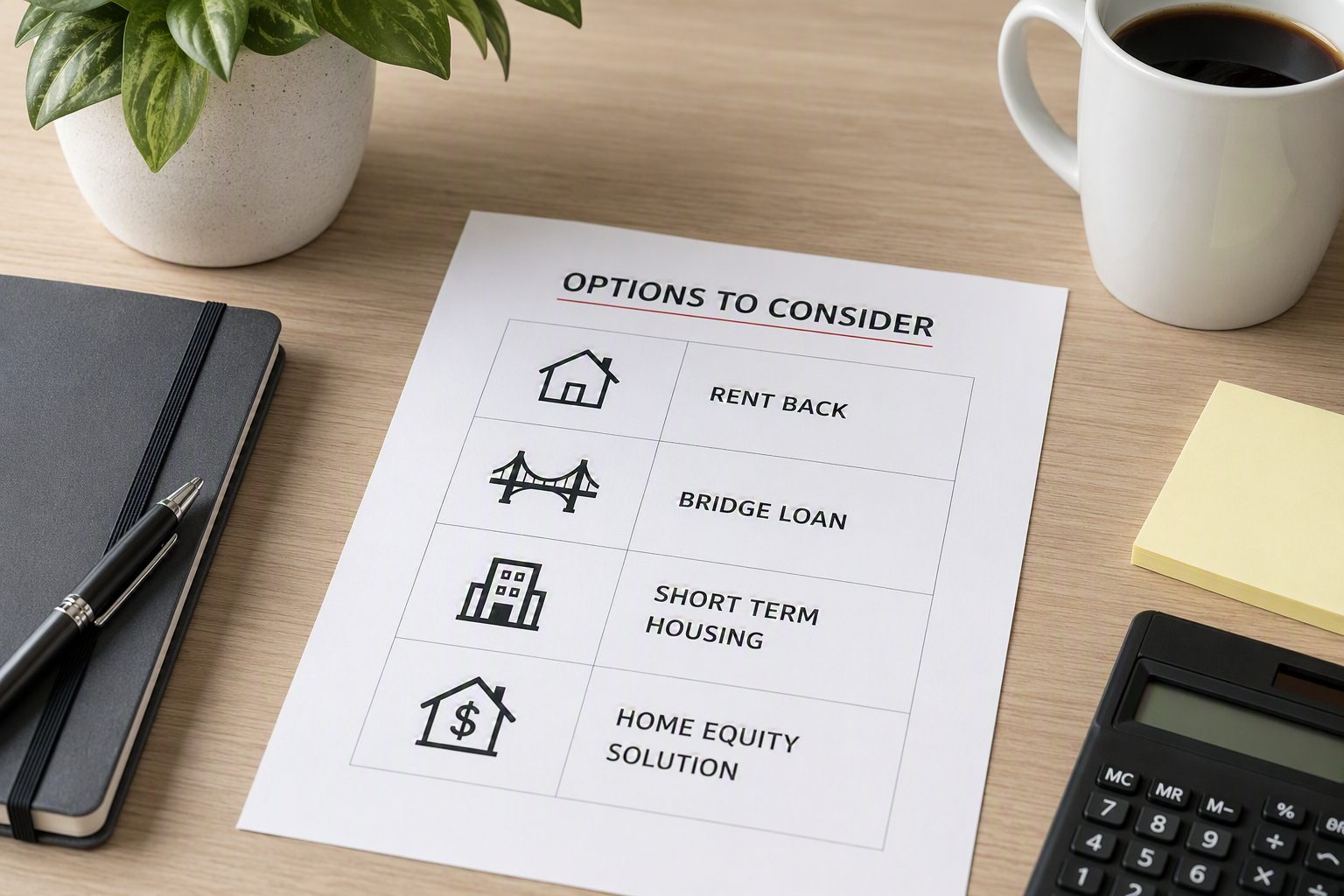
You might sell your current home first and negotiate a longer closing date or temporary post-closing possession, if the buyer agrees. This can provide more certainty, though it may require flexibility if you have not found your next home. Another option is to make a non-contingent offer only after confirming with your lender that you can safely qualify and carry the costs involved. Some homeowners explore bridge financing or a home equity line, but those tools involve interest costs, qualification requirements, and meaningful risk if the home takes longer to sell.
For certain buyers, selling first and renting briefly is the least emotionally appealing option but the strongest financial one. It removes the sale contingency from your next offer and may place you in a more competitive position. Whether that trade-off is worthwhile depends on your budget, moving needs, pets, school schedule, and comfort with a temporary move.
Start With a Plan for Both Homes
Buying and selling at the same time involves more than matching two closing dates. You need a clear estimate of your equity, a pricing plan for your current property, a lender conversation about multiple scenarios, and a realistic understanding of the type of homes you want to pursue.
A personalized strategy is especially valuable when your move involves different markets across Northern Kentucky and Greater Cincinnati. The pace of sales, price ranges, and buyer expectations can vary from one neighborhood to the next. Working through those details before the right home appears helps you act confidently instead of making a rushed decision under pressure.
The best next step is not always to list immediately or write an offer immediately. It is to understand your choices well enough that, when the right home comes along, your move supports the life you are building rather than stretching your finances too thin.
Reach out today. Your Home is My Purpose. Guiding You Like Family. Advising You Like a Professional. 859-640-6080


